
The introduction of tax deducted at source (TDS) on income from central government securities and state bonds may not lead to a significant effect on retail participation, according to market participants. The Union Budget proposed that starting October 1, 2024, investors may face a 10 per cent TDS on investments in central government securities and state development loans (SDLs). "Last Budget, TDS on interest on securities was reintroduced.

India can sustain 8 per cent annual GDP growth and the conducive macroeconomic configuration may become a launching pad for a step-up in the country's growth trajectory, said an article on the 'State of Economy' in the central bank's March Bulletin published on Tuesday. Over the period 2021-24, gross domestic product (GDP) growth has averaged above 8 per cent. The global economy is losing steam, with growth slowing in some of the most resilient economies and high frequency indicators, pointing to further levelling in the period ahead, said the article authored by a team led by RBI Deputy Governor Michael Debabrata Patra.
But there are challenges, observes Tamal Bandyopadhyay.

The migration of domestically developed intellectual property to foreign corporations within India reflects an anomaly in the demand pattern of the country's job market, points out Kanika Datta.

India Inc has reported a muted start to the financial year 2024-25, with a decline in net earnings and a modest single-digit uptick in revenues. An analysis of 488 companies that have released their results for the June 2024 quarter reveals a 1.6 per cent year-on-year (Y-o-Y) drop in combined net profit -- the weakest performance in the past seven quarters. In stark contrast, the combined net profit of these companies experienced a 13.6 per cent Y-o-Y increase in the previous quarter (Q4FY24) and a 65.2 per cent Y-o-Y rise in Q1FY24.

This growth gives sleepless nights to a bank chairman

The 30-share Sensex surged 299 points to close at 28,736 and the 50-share Nifty gained 90 points to end at 8,723.

Auto stocks are weighing on the indices.

Reflecting subdued global economic growth, India's outward foreign direct investment (FDI) fell by 33.3 per cent sequentially to $1.21 billion in August, compared to over $1.82 billion in July.
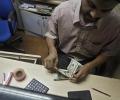
At a time when banks are engaged in a fierce battle to gain market share in the credit card segment, Citibank India has been losing its share, both in terms of outstanding cards and spends in the last few years. Still, average spends on Citi cards are higher than any other Indian bank. Last year, the global banking behemoth announced exit from its consumer banking franchises in 13 markets across Europe, Middle East and Asia, including India, citing lack of scale.

Rogue lending under political influence was rife in the Congress-led regime and is not happening in the Modi regime, certainly not on that scale. But if PSBs cannot lend as indiscriminately as they did last time in the name of 'credit expansion', how well will these banks do, asks Debashis Basu.

Flush with liquidity, banks are eager to lend. And, therein lies the problem, warns Tamal Bandyopadhyay.

'Investors with foreign currency-denominated goals, such as foreign education or foreign travel, should go for US equity funds.'

A key demand is to reduce the dividend distribution tax on listed firms.

From the Sensex pack, Larsen & Toubro jumped 4.26 per cent to emerge as the biggest gainer, followed by IndusInd Bank, Tech Mahindra, State Bank of India, HCL Technologies, Power Grid, NTPC, Axis Bank, Kotak Mahindra Bank, HDFC Bank and Wipro. Mahindra & Mahindra, Infosys, UltraTech Cement and Hindustan Unilever were the major laggards.

One smells a rat when cases are settled for too small a price offered either by the highest bidder or the promoter -- within and outside the legal ambit of insolvency process, observes Tamal Bandyopadhyay.

From the Sensex pack, NTPC, Tata Motors, Larsen & Toubro, Bajaj Finserv, Bharti Airtel, HDFC Bank, Reliance Industries, Titan, Power Grid and State Bank of India were the major gainers. ITC, UltraTech Cement, Tech Mahindra, Tata Steel, Wipro, Tata Consultancy Services and JSW Steel were among the laggards.

Severe skilled, unskilled shortage threatens to pull emergency brakes on India's industrial engine.

The polls are being viewed as a run-up to the general elections scheduled for May 2019 and will test the popularity of the government and its policies amid rising crude oil prices

The banking sector's credibility is on thin ice. Unless the government takes strict steps, things could get worse.

After bumbling for years since 2014, the Modi government seems to believe that massive government expenditure will lead us to prosperity supported by 'seat-of-the-pants' decision-making, observes Debashis Basu.
S Viswanathan is the new managing director of State Bank of India's associates and subsidiaries.

Reliance Industries was the top gainer in the Sensex pack, surging over 3 per cent, followed by Bajaj Finserv, IndusInd Bank, HDFC twins and Kotak Bank. NSE Nifty surged 143.25 points or 1.18 per cent to 12,263.55.

Sensex eneded 374 points higher on rate cut expectation from the RBI.

The Sensex closed higher by 170 points at 26,128 and the Nifty rose 59 points to end at 7,943.

State-run Bank of Baroda and Oriental Bank of Commerce are among those facing scrutiny.

Emerging markets facing 5th year of slow growth: World Bank.

Non-Performing Assets are a wake-up call for public sector banks.

Home loans also pose lower bad-debt risks for the banks than corporate loans.

Rajnish Kumar was on Wednesday appointed the new chairman of the largest public sector bank, State Bank of India (SBI), replacing Arundhati Bhattacharya who completes her one-year extended term on Friday.
Advice to the new finance minister from former RBI governor Raghuram Rajan: 1. Clean up banks by reviving projects that can be revived after restructuring debt. 2. Improve governance and management at public sector banks. 3. De-risk banking by encouraging risk transfers to non-banks and the market. 4. Reduce the number and weight of government mandates for public sector banks, and for banks more generally.

Ironically, bad loans and non-performing assets are on the rise in public sector banks in India, say sector watchers.

In a message to public sector banks (PSBs) that only performers will survive, the government, in an unprecedented move, has decided to allocate capital to only nine PSBs.
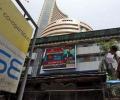
The stock exchange BSE has called off the merger of its unit at the Gujarat International Finance Tec-City International Financial Services Centre (GIFT IFSC), India International Exchange (India INX), with NSE International Exchange (NSE IX), a similar unit floated by rival National Stock Exchange (NSE), according to sources familiar with the development. BSE and NSE had been in discussions for the merger for over a year, but it has yielded no results, they said.

Is the worst over for Indian banks? The past two years saw them ride on treasury trades as deposits soared and credit growth dipped sharply. Gross and net non-performing assets (NPAs) moved south, and the provision coverage ratio (PCR), capital buffers, and profitability indicators are back at pre-pandemic levels. So, what's the plot ahead?

The Reserve Bank of India's (RBI's) record surplus transfer to the government has raised hopes among bond traders that the government might reduce its gross borrowing for the current financial year (2024-25/FY25) by up to Rs 1 trillion. The RBI approved a dividend of Rs 2.11 trillion for the central government for 2023-24, marking an increase of roughly 141 per cent from 2022-23 (FY23). In addition, the contingency risk buffer has been raised to 6.5 per cent from the previous 6 per cent.

Equity benchmark Sensex climbed 248 points to close at its all-time high on Tuesday, tracking unabated foreign capital inflows amid a positive trend in global markets. After a see-saw session, the 30-share BSE Sensex climbed 248.84 points or 0.40 per cent to settle at 61,872.99 -- surpassing its previous closing peak of 61,795.04 on November 11. During the day, the index witnessed a high of 61,955.96 and a low of 61,436.90.
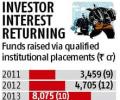
The return of investor confidence in the equity markets is bringing some of the large companies back to the fund-raising table.

Defending the timing of Yes Bank's moratorium, Reserve Bank of India governor Shaktikanta Das on Friday assured swift resolution to the issues concerning the beleaguered lender. "The resolution (to Yes Bank) will be done very swiftly, it will be done very fast. 30 days which we have given is the outer limit. You will see a very swift action from RBI," Das told reportters in Mumbai.
